Your Deposit Isn't the Problem. The Snake Pit Is.
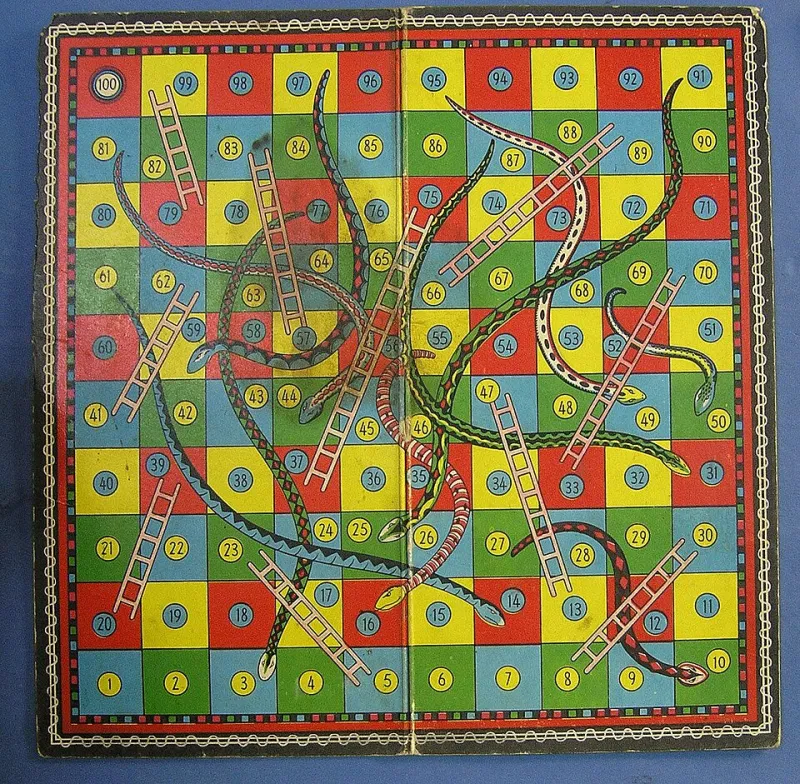
Photo: Bharswami, CC0, via Wikimedia Commons
Ask anyone who's watched a house purchase collapse and the story is rarely "we couldn't save enough." It's "the car died in month nine." It's "I got made redundant two weeks before the survey." It's "the tooth." The deposit pot rarely dies of starvation. It dies of a snake bite.
If you've ever played Snakes & Ladders, you know the feeling. You're three squares from the top, everything's going nicely — and then you land on the wrong square and slide all the way back to the bottom. The ladder never changed. The snake was always there, waiting.
Your savings climb works the same way. The monthly discipline, the Help to Buy ISA, the Lifetime ISA bonus, the standing transfer on payday — that's the ladder. But the board has snakes on it, and if you don't build somewhere for them to live, they'll bite the deposit every time.
What Exactly Is the Snake Pit?
The snake pit is a separate pot of money — physically separate, different bank if you can manage it — that exists purely to absorb emergencies so your deposit doesn't have to. It's not a savings goal. It's not for the wedding or the car. It's a wall between your future front door and life's talent for chaos.
Here's the uncomfortable maths. Say you're saving £600 a month towards a £20,000 deposit. Your car throws a £2,200 repair bill at you. Without a buffer, that's nearly four months of climbing erased — plus the psychological hit, which is often worse. Plenty of people don't restart after a blow like that. The momentum, that fragile thing, is gone.
With a £3,000 snake pit, the same bill is an inconvenience. Annoying, sure. But the ladder is untouched.
How Big Should the Pit Be?
Conventional advice says three to six months of expenses — advice aimed at households generally, not climbers specifically. For a deposit-saver, you can be smarter about it.
Work out your personal shock exposure:
- Income risk. Are you employed on a solid contract, self-employed, or on a fixed-term role? The wobblier the income, the deeper the pit. Self-employed? Lean towards six months. Salaried with generous sick pay? Three might do.
- Asset risk. Running a car adds a big, unpredictable snake to the board. So does being the person friends and family lean on financially.
- Timeline risk. Buying in 18 months gives a shock time to be rebuilt. Buying in six means even a small bite is fatal.
A practical target for most first-time buyers: one to three months of essential outgoings, held before you go flat-out on the deposit, then topped up in the background. If your essentials are £1,400 a month, a £3,000–£4,000 pit covers the commonest snakes — car, appliances, dental, a gap between jobs.
Yes, that money could be earning LISA bonus or interest in the deposit pot. It could. Right up until the transmission goes.
Where to Keep It (and Where Not To)
The pit has two jobs: be there, and be annoying to raid for anything else.
- Do: an easy-access savings account at a different bank from your current account. The extra login friction is a feature, not a bug.
- Do: automate a small top-up — £50 a month keeps it topped up without you thinking.
- Don't: put it in stocks and shares. Your emergency fund has one job, and that job is not to be down 20% on the day the boiler dies.
- Don't: keep it in your current account, where it will quietly get spent on Deliveroo and a weekend in Liverpool.
Defending the Pit
The pit fails in one main way: it gets raided for non-emergencies. Define an emergency before you need to. Our test: urgent, unavoidable, and threatens your income, health, home or transport. A friend's hen do in Marbella fails all three. A phone that "could do with upgrading" fails spectacularly.
Write your own definition down. It sounds daft. It works, because at 10pm on a Tuesday, "I said this counts and this doesn't" beats willpower.
When a Snake Actually Bites
So the worst happened and the pit's been drained. Here's the framework for getting back on the ladder without starting over:
1. Freeze, don't spiral. Pause deposit contributions for one month, no longer, and explicitly tell yourself it's a pause, not a failure. The plan didn't break; the plan included this.
2. Refill before you climb. Direct every spare pound to restoring the pit first, even if the deposit sits still for a couple of months. An empty pit is a deposit with a countdown timer on it.
3. Halve, don't stop. Once the pit is refilled, resume deposit saving at 50–70% of your old rate, not 100%. Rebuild the habit gently — crash restarts are the ones that don't last.
4. Log the snake. Note what bit you and what it cost. Patterns emerge. If the car's bitten twice in a year, the pit needs deepening — or the car needs replacing.
The Bigger Point
We talk a lot on this site about how much deposit you need, and rightly so. But the deposits that actually get spent on houses belong to people who made it through the shocks intact. The pit isn't a detour from the climb. It's the handrail.
Build it before you need it. Because the snakes don't send a calendar invite.