The Invisible Rung: How Your Credit File Quietly Decides What Your Mortgage Costs
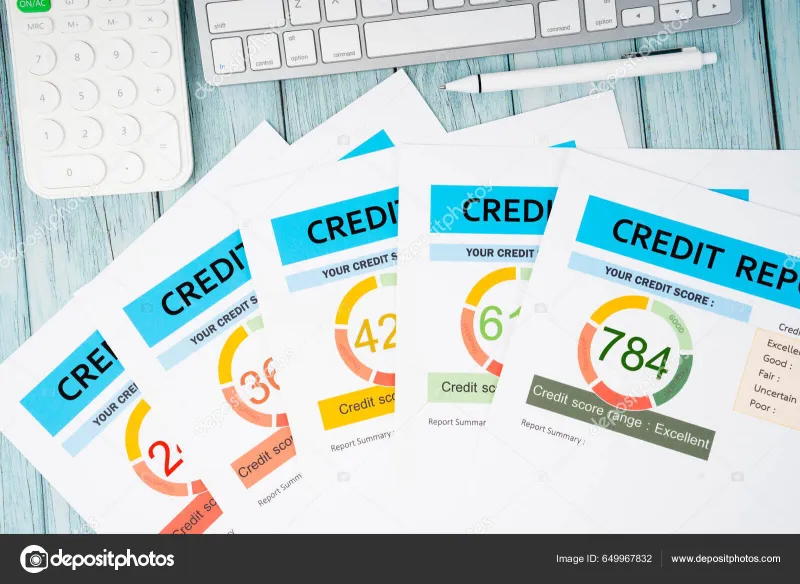
Photo: credit score report document with calculator on desk UK, via st5.depositphotos.com
Ask any first-time buyer what matters most and you'll get the same answer: the deposit. It's the number that dominates the group chats, the savings apps, the LISA statements. But there's a second number sitting quietly in the background that can be worth more than a year of packed lunches — and most people don't check it until a lender does.
Your credit score doesn't just decide whether you get a mortgage. It decides which mortgage. And the gap between a good file and a mediocre one is bigger than most people realise.
The 40-Point Swing
Lenders price risk. That's the whole game. A borrower with a spotless file gets offered the headline rates you see plastered on comparison sites. A borrower with a thin file, a missed mobile phone payment from 2021, or a maxed-out credit card gets nudged down the shelf — same house, same deposit percentage, but a rate that's 0.3% or 0.5% higher.
On a £220,000 mortgage over 25 years, half a percent is roughly £25,000 in extra interest. Twenty-five grand. For a couple of late payments and a card that was sitting at 95% of its limit.
And it's not just the rate. A weaker file can shrink how much a lender will lend in the first place, turning the house you wanted into the house you'll settle for.
Twelve Months Before You Apply
The good news: credit files respond to good behaviour faster than most people fear, but not overnight. If a mortgage application is 12–18 months away, here's the sensible sequence.
Check all three files — now. Experian, Equifax and TransUnion all hold slightly different data, and all three are free to check through their own services or via apps like Credit Karma and ClearScore. Errors are surprisingly common. Old addresses, accounts that were closed years ago, a debt that isn't yours — get them corrected early, because disputes take weeks to resolve.
Get on the electoral roll. It sounds trivially boring, but it's one of the strongest identity-and-stability signals a lender sees. Register at your current address, even if you rent.
Keep card utilisation low. The sweet spot is using under 25–30% of your credit limit. A £2,000 limit with £400 on it looks responsible. The same £1,900 balance looks like someone one paycheck away from trouble — even if you clear it in full every month.
Don't close your oldest account. Length of history matters. That student credit card from 2017 you never use? Put one small subscription on it and set up a direct debit. It's quietly doing useful work.
Stop applying for stuff. Every application leaves a hard search. A scattergun of new credit in the six months before a mortgage application makes you look desperate, not busy. Space applications out, and use eligibility checkers (soft searches) where you can.
The Myths That Waste People's Time
"Never borrow anything and you'll be fine." Genuinely one of the most expensive myths going. Lenders can't assess what they can't see. A file with no credit history at all — common among people who've always paid cash or debit — can score worse than someone with a modest card they clear monthly. The goal isn't debt-free perfection on paper; it's demonstrated, boring reliability.
"Retroactive credit building." You'll see this one in comment sections: apply for a mortgage, get declined, then spend three months frantically building credit and reapply. It doesn't work like that. Credit history is a track record, not a certificate. Six weeks of good behaviour is a six-week-old file, and lenders can see exactly when each account was opened.
"Checking my own score hurts it." No. Soft searches — including your own checks — are invisible to lenders. Check weekly if it makes you feel better.
"My score is the number lenders use." Not quite. Each lender runs its own scoring model on your raw file, so the three-digit score on your app is a useful health indicator, not the final word. A 'good' score with a recent missed payment can still trigger a decline. What matters is the underlying behaviour, not the badge.
A Quick Word on Bad Credit
If you've had CCJs, defaults or a debt management plan, all is not lost — but expectations need adjusting. Most mainstream lenders want to see a clean period of six years after serious marks, though some specialist lenders will consider applications sooner at higher rates. If that's you, the move is usually to build a bigger deposit, keep everything else spotless, and speak to an independent mortgage broker who knows the specialist market rather than applying blind and leaving footprints on your file.
The Boring Habit That Pays
Here's the whole strategy in one sentence: two direct debits, low balances, no new applications, electoral roll, checked quarterly.
None of it is exciting. All of it is the difference between the rate on the billboard and the rate in the small print. Your deposit gets you through the front door — your credit file decides what the door costs. Give both of them a year's head start.