Should Your Savings Skip the ISA and Attack the Mortgage Instead?
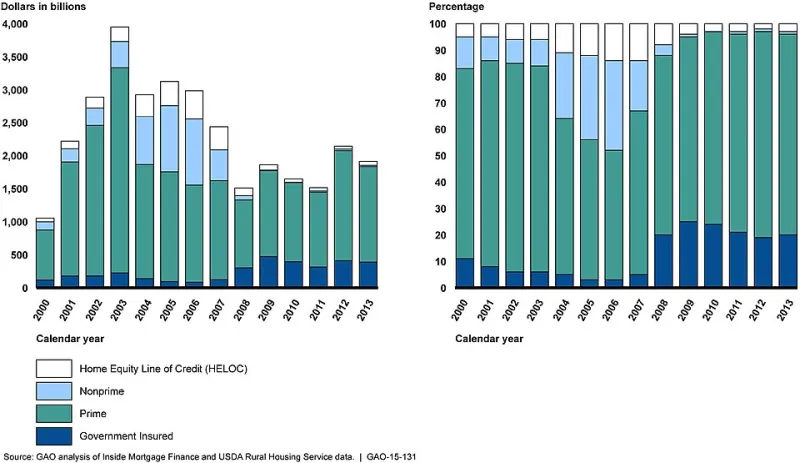
Photo: U.S. Government Accountability Office, Public domain, via Wikimedia Commons
There is a particular thrill to logging into your mortgage account, clicking "make an overpayment" and watching a chunk of years evaporate off your term. Savers who've done it tend to get evangelical about it. Savers who haven't tend to ask a very reasonable question: is this actually clever, or just satisfying?
Short answer: usually clever, sometimes not. Here's the honest breakdown.
The Case for Overpaying: A Guaranteed Return
When you overpay a mortgage at, say, 4.5%, you're effectively earning a guaranteed, tax-free 4.5% on that money. Compare that to the alternatives:
- Cash ISA: currently paying around 4% or less with the best rates, and falling as the Bank of England trims rates.
- Stocks & Shares ISA: long-run averages of maybe 5–7% before inflation, but with genuine risk of a down year exactly when you'd rather it didn't happen.
A guaranteed 4.5% beats a guaranteed 4%. And unlike investment returns, the mortgage saving is certain, immediate, and compounds for the rest of your term. On a £200,000 balance over 25 years, a consistent £200 monthly overpayment can shave several years off the term and save tens of thousands in interest. No ISA does that with certainty.
There's also the psychological dividend. Watching your projected payoff date slide from 2052 to 2048 does something to your motivation that a slowly growing ISA balance simply doesn't. Behavioural finance people call this "mental accounting"; we call it the reason you'll actually stick with the plan.
The Case Against: Liquidity Is a Feature, Not a Bug
Here's the problem. Money in an ISA can be withdrawn. Money in your mortgage cannot — not without remortgaging or a further advance, which costs time, fees and possibly a worse rate.
So before you fling cash at your lender, check your foundations:
- Emergency fund first. Three to six months of essential spending, held in easy access savings, before a single pound of overpayment. Redundancy, a boiler, a tooth — life bills arrive uninvited.
- Higher-interest debt first. A credit card at 24% makes a 4.5% mortgage overpayment look like a rounding error. Clear the expensive stuff.
- Retirement contributions. If your employer matches pension contributions, that's an instant 100% return. Nothing on your mortgage statement competes.
The Traps: ERCs and the 10% Rule
Two bits of small print can turn a smart overpayment into an expensive own goal.
Early repayment charges (ERCs). Most fixed-rate deals charge a penalty — often 1–5% of the overpaid amount — if you exceed your annual allowance during the fixed period. Overpay £15,000 on a deal with a 3% ERC and a £10,000 allowance, and you could owe £150 in penalties for the privilege. Check your mortgage offer document before you transfer anything.
The 10% annual allowance. Most lenders let you overpay up to 10% of your outstanding balance each year, penalty-free. On a £200,000 balance, that's £20,000 — generous. On smaller balances it's tighter, so if you've got a lump sum, you might split it: pay the allowance now, park the rest in savings, and pay it after your fixed deal ends or on the anniversary date when the allowance resets.
One more wrinkle: some lenders reduce your monthly payment when you overpay rather than your term, which quietly cancels most of the interest saving. If in doubt, ask for the overpayment to be applied to reduce the term instead. It's a one-line request that can be worth thousands.
A Middle Path That Actually Works
You don't have to choose. Plenty of savers run a hybrid: max out workplace pension matching, keep a healthy emergency buffer, fill the ISA each tax year, and then route whatever's left — or the 10% allowance — at the mortgage. Others overpay aggressively during expensive fixed-rate periods and ease off when rates fall.
The real test is this: what would you do with the money otherwise? If the honest answer is "it'd slosh about in a current account earning 1%", overpay. If it's "invest it for 20 years and I genuinely won't panic-sell in a dip", the ISA might edge ahead over the long run.
Overpaying isn't the most exciting move in personal finance. But it's the rare strategy where the maths, the taxman and your own peace of mind all pull in the same direction — provided the emergency fund is full and you've read the small print first.