The Reverse Bank of Mum and Dad: When You're the One Funding the Family

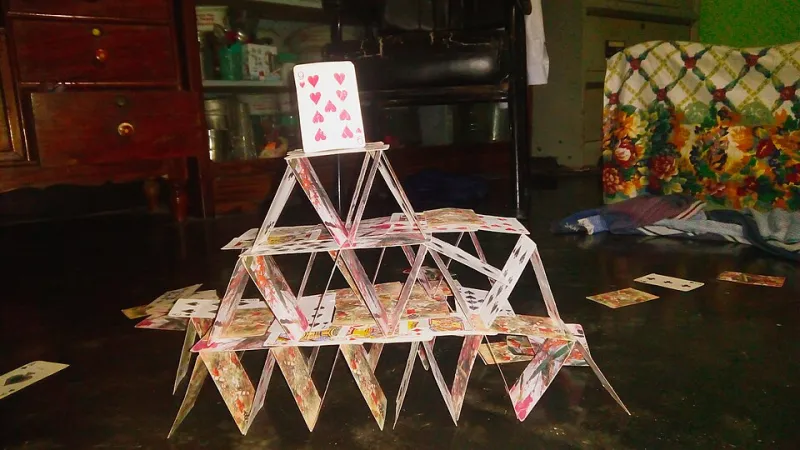
Photo: Léna, CC BY-SA 4.0, via Wikimedia Commons
The deposit that never was
Ask anyone under 35 about the Bank of Mum and Dad and they'll picture a cheque landing in their account. But there's a second, much quieter version of this arrangement playing out in flats and shared houses across Britain — and it flows the other way.
A recent survey by KIS Finance estimated that a meaningful chunk of adult children are giving money to their parents rather than receiving it. Some cover rising rents. Others top up a pension that never quite stretched. A surprising number are helping with care costs that nobody planned for.
If that's you, your savings journey doesn't look like a staircase. It looks like a treadmill — and the belt is set to someone else's pace.
How the treadmill works
It rarely starts as a decision. It starts as a transfer. £200 a month to help with the gas bill. Then the car needs fixing. Then a birthday becomes a standing order you daren't cancel.
Before long, you're doing mental arithmetic in the supermarket: if I send less this month, what happens? That's not generosity anymore. That's a dependency neither of you agreed to out loud.
The cost to you is brutal in ladder terms. Every £250 a month you redirect is roughly £3,000 a year off your deposit — and thanks to compounding, more like £18,000 off your purchasing power over five years once you factor in what that money would've earned in a Lifetime ISA or decent savings account.
The strings attached to 'gifted' money
Then there's the other side of the coin. Plenty of first-time buyers do get help from parents — but the help arrives with an invoice nobody mentions at the time. Weekly dinners that become obligations. Opinions on your partner, your job, your postcode, framed as concern. The slow, suffocating sense that a two-bedroom terrace in Stoke now comes with a shareholder.
A gift with conditions isn't a gift. It's a loan with flexible repayment terms. And it corrodes relationships far faster than an honest conversation about money ever would.
Say the quiet part out loud
Whether you're giving or receiving, the fix is the same: name the arrangement. If you're sending money to your parents, agree explicitly what it covers, how long it lasts, and what happens if your circumstances change. Put it in a text message at minimum — something dated and specific beats a vague family understanding every time.
If you're receiving help, ask your parents directly whether it's a gift or a loan, and tell your lender the truth either way. Solicitors' letters confirming gifted deposits exist for a reason: lenders will ask, and a signed declaration protects everyone, including you, if a sibling later feels hard done by during probate.
A proper gifted deposit letter states that the money is non-repayable and that the giver holds no stake in the property. It takes twenty minutes with a solicitor and saves years of family friction.
Boundaries that hold
You can love your parents and still cap what you give them. A few practical rules:
- Fix the figure, not the feeling. Decide what you can genuinely afford — say 5% of take-home pay — and treat it like a subscription. When your finances change, the subscription changes.
- Fund outcomes, not shortfalls. £300 towards a specific repair is easier to sustain than an open-ended monthly top-up.
- Give yourself a review date. Revisit the arrangement every six months. Circumstances move; arrangements shouldn't drift.
- Loop in siblings. If there are others in the family, split the load or at least make it visible. Secret generosity breeds secret resentment.
You're allowed to put your own oxygen mask on first
Here's the uncomfortable truth: securing your own financial future is not a betrayal of your parents. A first-time buyer with a stable home is in a far better position to help their family for decades than one who burned out their savings at 29 and burned out at 32.
The ladder is hard enough to climb without carrying someone on your back the whole way up. Set the boundary, document the arrangement, and climb — so that one day, if they need you again, you'll actually have something to give.